
Three months ago I pulled every grocery receipt I could find from a drawer in the kitchen and laid them out on the table. I wasn’t trying to build a budgeting exercise — I was just tired of feeling surprised every time I checked my bank account after a “quick” trip to the store. What I found wasn’t a spending problem so much as a save money on groceries problem I didn’t know I had: I was buying good food and then not eating a third of it.
That drawer full of receipts turned into a real experiment, and this post walks through what actually moved the number — not a generic list of “buy in bulk” tips, but the specific system that took our household from a wandering, always-a-little-too-high grocery bill to something predictable.
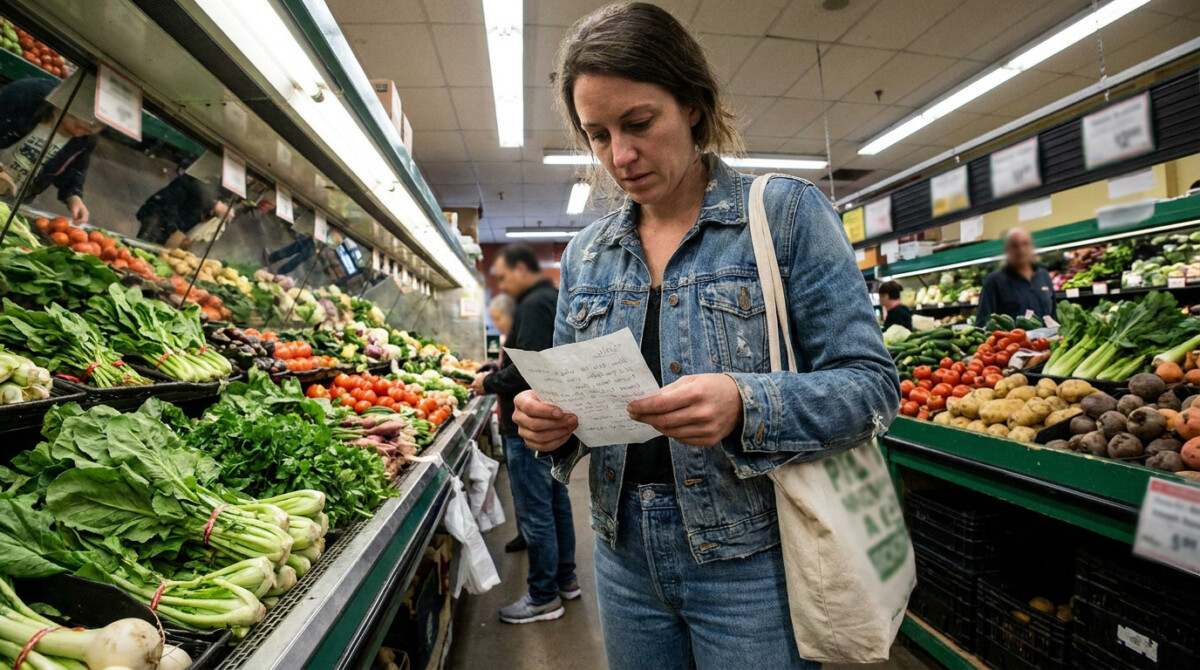
Why Does a Grocery Bill Creep Up Without Anyone Noticing?
Grocery spending is unusual compared to other budget categories because it’s made up of dozens of small decisions instead of one or two big ones. Nobody “overspends on groceries” the way they might overspend on a vacation. Instead, the total quietly drifts upward through small additions — a rotisserie chicken here, a bag of pre-cut fruit there, a “we’re out of this” run mid-week that turns into a full cart.
The USDA’s Economic Research Service tracks national food spending trends and consistently finds that food-at-home costs vary widely by household — which is a useful reminder that there’s no single “correct” grocery budget, only a gap between what you’re spending now and what’s realistic for your household size and goals.
What Actually Works: A System, Not a List of Tips
Most grocery-saving advice is really just a pile of unconnected tips — clip coupons, buy generic, don’t shop hungry. Some of that is fine advice, but none of it adds up to much unless it’s part of a repeatable weekly routine. Here’s the system that made the biggest difference for us, roughly in order of impact.
Step 1: Meal-Map From the Fridge Backward, Not the Recipe Forward
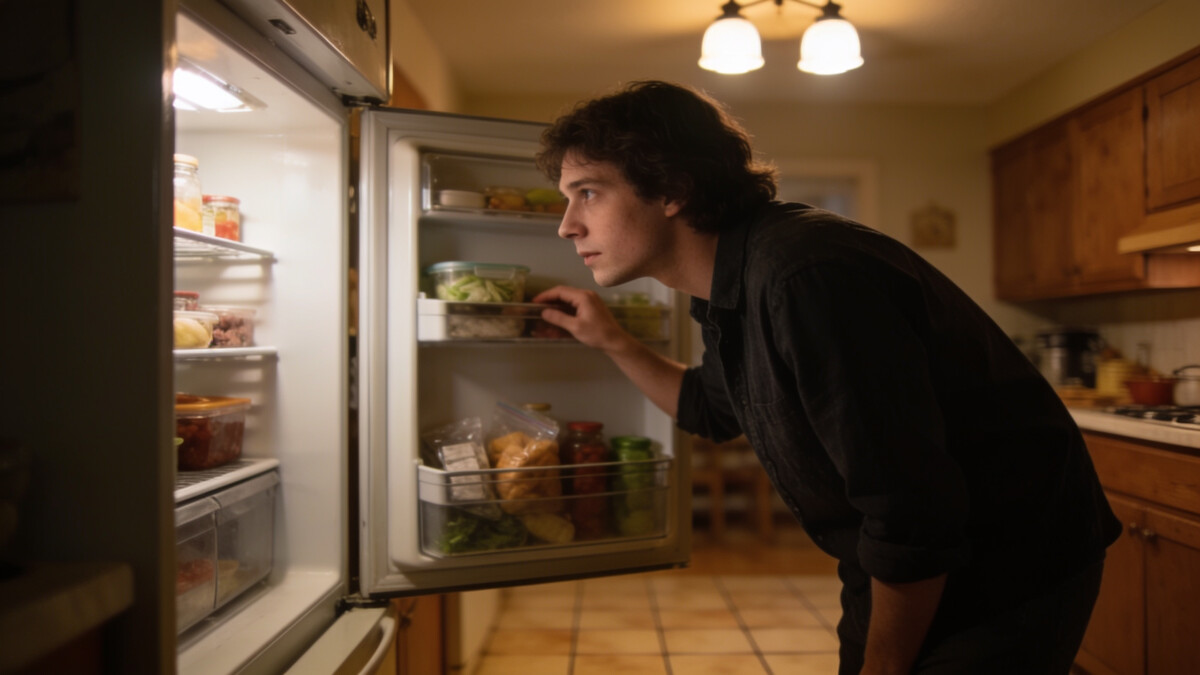
The single biggest shift was reversing the usual order of meal planning. Instead of picking recipes first and then shopping for whatever they require, we started by opening the fridge, freezer, and pantry and writing down everything that needed to be used soon. Meals got built around that list first, and only the gaps got added to the shopping list.
This sounds small, but it’s the difference between a kitchen where food quietly expires in the back of a drawer and one where almost nothing goes to waste.
Step 2: Compare Unit Price, Not Package Price
The sticker price on a package tells you almost nothing on its own. A “family size” bag can cost more per ounce than the regular size, and a store-brand item that looks $0.30 cheaper can actually be the worse deal once package size is accounted for. Most stores print a unit price (cost per ounce, per pound, or per count) in small text on the shelf tag — that number, not the big price on the front, is what should drive the decision.
Once this became a habit, we stopped assuming “the bigger bag is always the better deal” and started actually checking. It wasn’t always true.
Step 3: Build a Rotating List of 10–12 “Default” Meals
Decision fatigue is a real cost. Standing in the kitchen at 6 p.m. trying to invent a new meal from scratch is exactly when a $30 takeout order happens. Having a short rotation of reliable, ingredient-overlapping meals removed most of that friction — and because the ingredients overlapped across meals, we could buy larger quantities of a smaller number of staples instead of a little bit of everything.
Step 4: Buy Staples in Bulk Only When the Math Actually Works
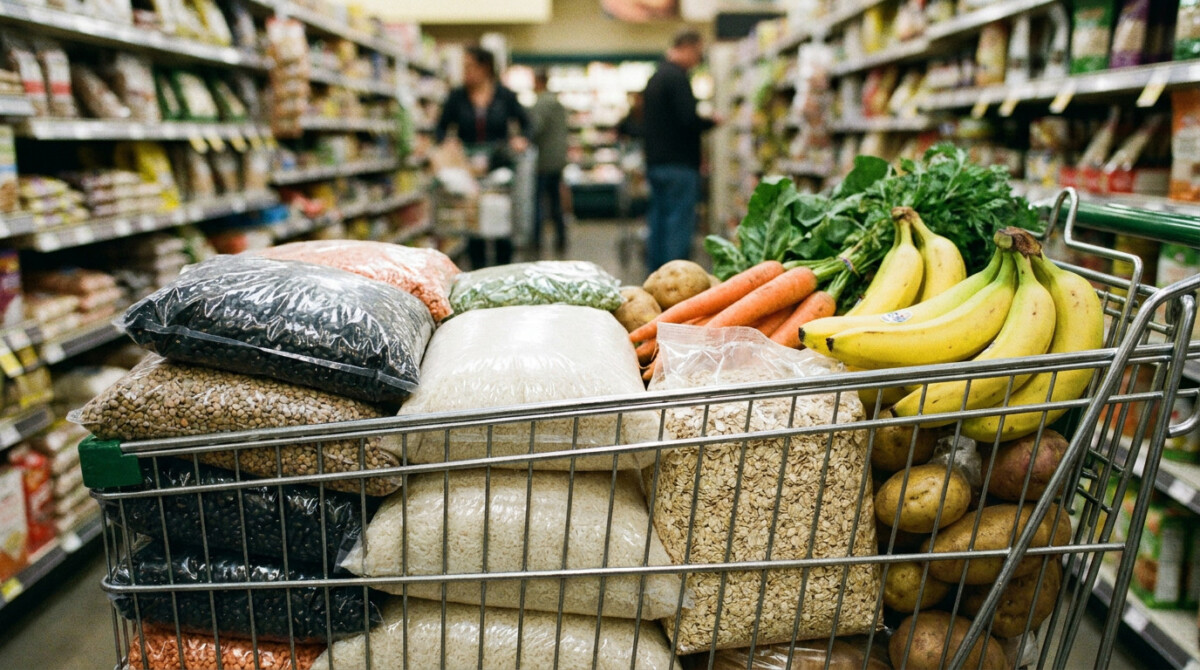
Bulk buying gets recommended constantly, but it only saves money under specific conditions: the item needs a long shelf life (or a household that will actually finish it before it spoils), the unit price genuinely needs to be lower, and there needs to be storage space that doesn’t create clutter that gets ignored. Rice, oats, dried beans, and pasta are usually safe bulk buys. Fresh produce almost never is, unless there’s a specific plan to freeze or preserve the excess.
Step 5: Treat Cashback Apps and Loyalty Programs as a Bonus, Not a Strategy
Store loyalty apps and cashback programs can add up over a year, but they work best layered on top of good habits — not as the main plan. Chasing rewards points by buying things that weren’t already on the list is a net loss dressed up as a win.
What Changed When We Tracked It for Real
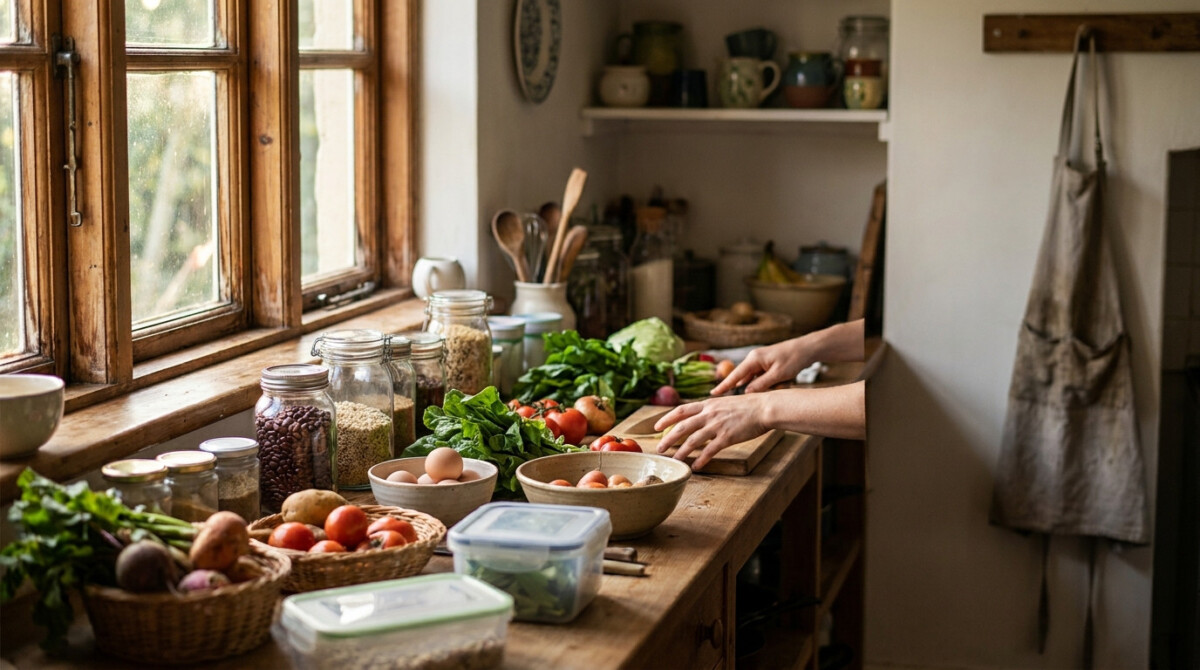
Here’s a simplified version of what our own household saw over two months of actually following this system, for a household of four. These numbers are specific to us, but the pattern — spending flattening out and becoming predictable — is what tends to show up when the system above gets followed consistently.
| Category | Before (Monthly Avg.) | After (Monthly Avg.) |
|---|---|---|
| Planned grocery trips | $520 | $430 |
| Unplanned “quick” store runs | $140 | $35 |
| Estimated food thrown away | ~18% of purchases | ~6% of purchases |
| Total monthly food-at-home spend | $660 | $465 |
The biggest single line item wasn’t the planned trips — it was the unplanned runs and the food that quietly went bad before it got eaten. That matches what a lot of national research on food waste has found: the amount thrown away, not just the amount bought, is often where the real money is.
Does Buying Store Brand Actually Sacrifice Quality?
This is worth addressing directly, because it’s the objection that stops a lot of people from switching. For most pantry staples — flour, canned tomatoes, frozen vegetables, oats, dairy — store brands are frequently produced in the same manufacturing facilities as name-brand products, just packaged differently. The taste and quality gap is usually small to nonexistent. Where it does show up more is in categories where flavor profile matters a lot to people, like coffee, snack foods, or condiments — those are reasonable places to keep a name-brand preference if it matters to your household.
A Realistic Starting Point If This Feels Like a Lot
None of this needs to happen all at once. If picking one place to start, the fridge-first meal-mapping habit (Step 1) tends to have the fastest payoff, because it directly targets food waste — which research and our own tracking both point to as the largest avoidable cost in a typical grocery budget. Everything else can be layered in over the following weeks.
Frequently Asked Questions
How can I save money on groceries without using coupons?
Meal-mapping around what’s already in your kitchen, tracking unit prices instead of sticker prices, and cutting food waste typically save far more than coupon clipping — with a lot less time invested.
How much should a family spend on groceries each month?
It depends on household size, location, and dietary needs, but the USDA’s food spending research and its published monthly food plan estimates are a useful benchmark for comparing your own numbers against a range of typical households.
Are store-brand groceries actually worth buying?
For most staple items, yes — store brands are often made in comparable facilities to name brands and cost noticeably less, with the quality gap being smallest on pantry basics and largest on flavor-driven categories like coffee or snacks.
What’s the single biggest way to lower a grocery bill?
Reducing food waste. Before changing what gets bought, changing how much of it actually gets eaten is usually the highest-leverage move — and it’s the one most grocery advice skips over entirely.
For a broader look at getting the rest of your monthly spending under control, see our guides on building a budget from scratch and zero-based budgeting. If unplanned grocery runs keep draining money that was meant for something else, it may also be worth reading how much you should actually keep in an emergency fund so a bad week at the store doesn’t turn into a bad month overall. The CFPB’s consumer tools also offer free spending-tracking worksheets that pair well with the system above.