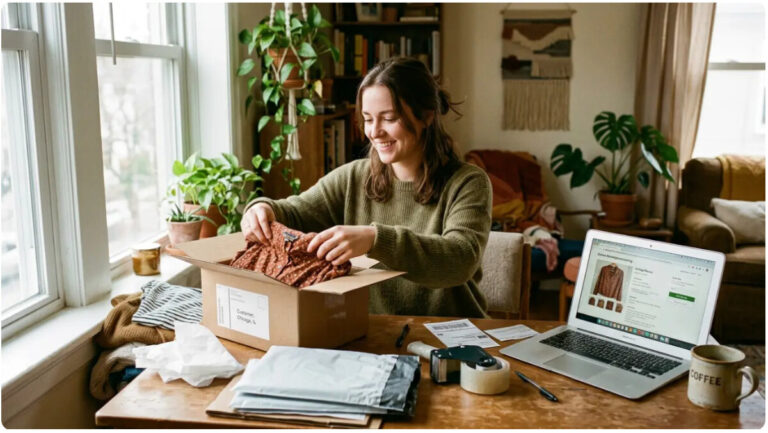
Three weeks after I finally opened the hallway closet I’d been avoiding since a move two years ago, I had listed forty-one items and watched $890 land back in my checking account — money that had just been sitting there in trash bags. If you’re trying to sell unused items online, the hardest part usually isn’t the selling itself. It’s admitting how much value has been quietly rotting in a closet, a garage shelf, or the trunk of a car.
This isn’t another “just snap a photo and post it” list. Below is exactly where to list what, how to price things so they actually sell instead of sitting for six months, how to avoid the scams that specifically target people who sell unused items online, and — because almost nobody talks about this part — what the IRS now expects you to report once your side selling adds up.

Why Selling Unused Items Online Beats a Trip to the Donation Bin
Donating is fast, and it’s the right call for genuinely worn-out things. But it also quietly writes off money you’d notice if it showed up any other way. I used to load up the car for a donation run without stopping to check whether anything was actually worth listing first — until a friend pointed out that the stand mixer I was about to give away was selling for $110 used, barely touched, in my own kitchen cabinet. That single item covered a car payment.
The math changes once you separate “clutter” from “inventory.” A box of chipped mugs and worn-out socks is clutter — donate it, recycle it, move on. A barely-used kitchen appliance, an outgrown winter coat with the tags still attached, a phone sitting in a drawer since your last upgrade, or a set of hand tools you bought for one project — that’s inventory. When you sell unused items online instead of donating on autopilot, you’re not becoming a full-time reseller. You’re just choosing not to leave money in a box.
If you’re also working through a broader plan to free up cash each month, this pairs naturally with a project like cutting your recurring monthly expenses — one lowers what goes out, the other adds a lump sum that goes in.
Where Should You Actually Sell Unused Items Online?
There’s no single best marketplace — there’s a best marketplace per category. The single biggest mistake people make when they sell unused items online is listing everything on one platform because it’s familiar, then wondering why the designer handbag and the used lawnmower both sat for two months without a single message.

| Item Type | Best Platform | Typical Seller Fee | Why It Works |
|---|---|---|---|
| Furniture, large or bulky items | Facebook Marketplace | $0 (local pickup) | Huge local audience, no shipping hassle |
| Clothing, shoes, accessories | Poshmark | 20% flat commission | Prepaid shipping labels, fashion-focused buyers |
| Electronics, collectibles, parts | eBay | ~13% final value fee | Auction format finds true market price |
| Everyday household goods | Mercari | 10% selling fee | Simple app listing, broad buyer base |
| Tools, appliances, sporting goods | OfferUp | $0–2.9% (varies by shipping) | Local buyers who skip shipping delays |
| Phones, tablets, laptops (fast cash) | Decluttr or Gazelle | Built into quoted price | Instant quote, mailed-in, no listing needed |
| Baby gear, kids’ items | Nextdoor or local Facebook groups | $0 | Neighbors trust neighbors, fast turnover |
A practical rule of thumb: if it’s heavy, breakable, or worth less than $40, keep it local and skip shipping altogether. If it’s small, valuable, or has a passionate resale community — think designer items, retro electronics, or hobby gear — a shipping-based platform will usually get you a better price, even after fees.
How Do You Price Something So It Actually Sells?
Underpricing leaves money on the table. Overpricing is worse — it means your item sits, gets buried by newer listings, and eventually sells for less than it would have if you’d priced it right the first time. Before you sell unused items online, spend five minutes checking what identical or near-identical items actually sold for, not what other people are currently asking. Most marketplaces let you filter for “sold” listings; that’s the real market price, not someone’s wishful thinking.
From there, a simple formula works for most categories: start at roughly 50–60% of the original retail price for lightly used items in good condition, and adjust down for wear, missing pieces, or an outdated model. Items still in the original packaging can often hold 70% or more of retail. Price a little above your true minimum — most platforms expect an offer or two, and starting $5–10 higher gives you room to negotiate without feeling like you’re giving it away.
One thing that consistently moves listings faster: photograph the item in real light against a plain background, include any flaws honestly in the description, and answer messages within a few hours. Buyers move on quickly, and the seller who responds first usually wins the sale — regardless of price.
Is It Safe to Sell Unused Items Online to a Stranger?
Mostly, yes — but the scams that target people who sell unused items online follow a predictable pattern, which makes them easy to spot once you know what to look for. The most common one starts with a buyer who “accidentally” overpays you with a check or mobile payment and asks you to refund the difference. The original payment turns out to be fake days later, and you’re out whatever you sent back.
The Federal Trade Commission’s guidance on avoiding scams when selling online is worth the five minutes it takes to read. The short version: never accept a check for more than the agreed price, never send money back to a buyer who claims they overpaid, and if you’re meeting someone in person, choose a well-lit public spot — many local police stations now have a designated “safe exchange zone” in their parking lot specifically for this.
For shipped sales, stick with the platform’s built-in payment system rather than moving the conversation to text or a separate app. It feels friendlier, but it’s also exactly what scammers ask for, because it strips away any buyer or seller protection the marketplace offers.
Do You Owe Taxes When You Sell Unused Items Online?
This is the part most guides skip, and it’s genuinely changed in the past couple of years. If you’re just clearing out your closet and selling things for less than you originally paid, that’s generally not taxable income — you’re selling a personal item at a loss, the same as a garage sale. Where it gets more complicated is if you’re reselling for a profit, running a side business, or your total payments through a single platform climb high enough to trigger reporting.
Under current federal rules, payment apps and online marketplaces are only required to send you a Form 1099-K once you cross $20,000 in payments and more than 200 transactions in a calendar year on that platform. That threshold covers the vast majority of people who occasionally sell unused items online for personal reasons. But the IRS is clear that all income is technically reportable whether or not a form ever shows up — so if you’re consistently buying low and reselling for profit, it’s worth keeping simple records of what you paid, what you sold it for, and any related expenses, regardless of what any single platform reports.
What’s the Smartest Way to Photograph, Pack, and Ship What You Sell?

Natural light does more for a listing than any editing app. Shoot near a window during the day, use a plain sheet or wall as a backdrop, and take at least four angles, including any flaws up close — buyers trust listings that show the truth rather than hide it. A short close-up of a working feature (a zipper, a switch, a seam) reassures buyers more than a paragraph of description ever will.
For shipping, weigh and measure the item before you list it so your shipping price is accurate instead of a guess — underpricing shipping is one of the fastest ways to lose money on an otherwise good sale. Wrap breakables in at least two inches of padding on every side, use a box that’s snug rather than oversized (less room to shift means less damage), and always take a photo of the packed box and printed label before you drop it off. If a delivery dispute ever comes up, that photo is your proof the item shipped safely.

Frequently Asked Questions About Selling Unused Items Online
What sells fastest when you sell unused items online?
Seasonal items listed just ahead of demand — winter coats in early fall, patio furniture in spring — along with brand-name electronics, name-brand kids’ clothing, and anything still in its original packaging tend to move within days rather than weeks.
Do I need a business license to sell my used things online?
No. Selling personal items you already own and used yourself is not considered a business, even if you do it regularly. A license only becomes relevant if you start buying items specifically to resell for profit as an ongoing activity.
Which platform has the lowest fees for sellers?
Facebook Marketplace and local groups like Nextdoor charge no selling fees at all for local, in-person transactions, which makes them the cheapest option whenever an item doesn’t need to be shipped.
How long should I wait before lowering the price on a stale listing?
If an item hasn’t had a single message within seven to ten days, that’s usually a sign the price is off, not the platform. A 10–15% price drop, paired with refreshed photos, is often enough to get it moving again.
Is it worth selling low-value items, or should I just donate them?
If an item would sell for less than about $10–15, the time spent photographing, listing, and messaging usually isn’t worth it compared to donating it and moving on. Save the selling effort for items that clear a meaningful amount.
The Real Payoff of Selling Unused Items Online
That $890 didn’t come from a windfall or a new side hustle — it came from forty-one things I already owned and wasn’t using. Once you sell unused items online with a plan instead of a random weekend push, it stops feeling like a chore and starts feeling like finding money you forgot you had.
If this becomes a habit rather than a one-time cleanout, it fits naturally next to other income-building moves — see our guide to realistic side hustles you can start this week for ways to keep the momentum going. And if you’re not sure what to do with the extra cash once it lands, putting it toward building your emergency fund is one of the most useful places it can go.