
If you are looking for a complete zero based budgeting step by step guide, this is the exact system that finally worked for me after I quit on day nine.
I had a beautiful spreadsheet. Every dollar had a job. And then my dog swallowed something he shouldn’t have, the vet wanted $340, and my perfect little plan turned into a lie by the second week of the month. I closed the tab and went back to what I’d done for years: checking my balance on Thursday and hoping.
What I got wrong wasn’t the math. It was that I thought a budget was a prediction. It isn’t. It’s a decision you’re allowed to revise. Once that clicked, zero-based budgeting became the system I’d hand to anyone starting from scratch today.

What is zero-based budgeting, exactly?
Zero-based budgeting means assigning every dollar of your income to a specific job — spending, saving, giving, or paying down debt — until you have zero dollars left unassigned. “Zero” refers to what’s left to assign, not what’s left in your bank account.
That distinction trips up almost everyone, so it’s worth saying twice: you are not spending down to zero. If $250 goes to your emergency fund, that money is assigned. It’s doing a job. The job just isn’t “get spent.”
Income − Everything you assign = $0 left to assign
Where other methods tell you what percentage should go where, zero-based budgeting refuses to guess for you. It just insists you make the call on all of it, on purpose, before the month starts. The federal CFPB budgeting tools use the same underlying logic — income in, every category accounted for — which is a reasonable sanity check that this isn’t some fringe internet method.
Zero-based budgeting vs. the 50/30/20 rule
The 50/30/20 rule hands you fixed percentage buckets: 50% needs, 30% wants, 20% savings and debt. Zero-based budgeting hands you no buckets at all. You build them from your actual life, every single month.
My honest take after running both: percentage rules are better for a quick check on whether your fixed costs have gotten out of hand. Zero-based budgeting is better at actually changing behavior, because you can’t hide inside a category. “30% for wants” lets $180 of takeout disappear next to your gym membership. Zero-based budgeting makes you write “Takeout — $180” in your own handwriting, and something about seeing it there did more work on me than any percentage ever has.
Who should skip zero-based budgeting?
I’d rather tell you this early than waste your Sunday. Zero-based budgeting is a poor fit if any of these describe you right now:
- You genuinely cannot cover your fixed costs. If income minus rent, utilities, and food is already negative, budgeting isn’t the bottleneck — income or housing is. A budget will just document the problem more precisely.
- You’re in an acute crisis month. Job loss, a medical event, a move. Stabilize first, come back in six weeks.
- You’ve tried three detailed systems and abandoned all three. Not a character flaw — some people need less friction, not more. Automated savings plus a simple spending limit may serve you better.
Irregular income, by the way, is not a disqualifier. It’s the situation zero-based budgeting handles best, and I’ll come back to it below.
How to build a zero-based budgeting plan in 5 steps
Set aside 45 minutes for your first one. Every session after that took me about 20 minutes, and by month four I was down to roughly 12.

Step 1 — Write down the income you’re actually confident about
Use take-home pay, not gross. If your income varies, use the lowest month from the past six — not the average. The average will betray you in a slow month, and one betrayal is usually enough for people to abandon the whole system.
Put that number at the top of the page. It’s your ceiling.
Step 2 — List fixed costs first, and be ruthless about what counts
Rent or mortgage, utilities, insurance, minimum debt payments, phone, transportation. These are the bills that arrive whether you’re paying attention or not.
Something I got wrong for two months: I filed streaming subscriptions under “fixed.” They are not fixed. They’re choices that happen to be on autopay, and burying them in the fixed column meant I never questioned them. Move anything cancellable onto its own line where you can see it.
Step 3 — Assign variable spending using real history, not wishes
Open your last three months of bank and card statements and total what you truly spent on groceries, gas, eating out, and household supplies. This is where zero-based budgeting gets uncomfortable, and where it starts working.
When I did this the first time, my “$400 grocery budget” turned out to be a $587 grocery reality. I’d been budgeting a fantasy for years and then feeling like a failure every month for not living inside it. Government spending surveys like the Bureau of Labor Statistics Consumer Expenditure Survey are useful for seeing how households actually allocate money by category — but your own statements beat any national average. (No statements handy? Here’s how to track spending without an app for a few weeks first.)
Step 4 — Fund the things that only show up occasionally
This step separates a budget that survives from one that dies in week two. Car repairs, annual insurance premiums, holidays, vet bills, the dentist. None of these are emergencies — they’re guarantees with unclear dates.
Give each one a monthly line. Car registration is $180 a year? That’s $15 a month sitting in a sinking fund, waiting. My $340 vet bill wasn’t what broke my first attempt. Having no line for it was.
Step 5 — Send what’s left to savings and debt, then check for zero
Add it all up. Money still left to assign? Keep going — push it to your emergency fund, extra debt payments, or a goal you actually care about. Over budget? Cut. The number at the bottom has to read zero before you’re finished.
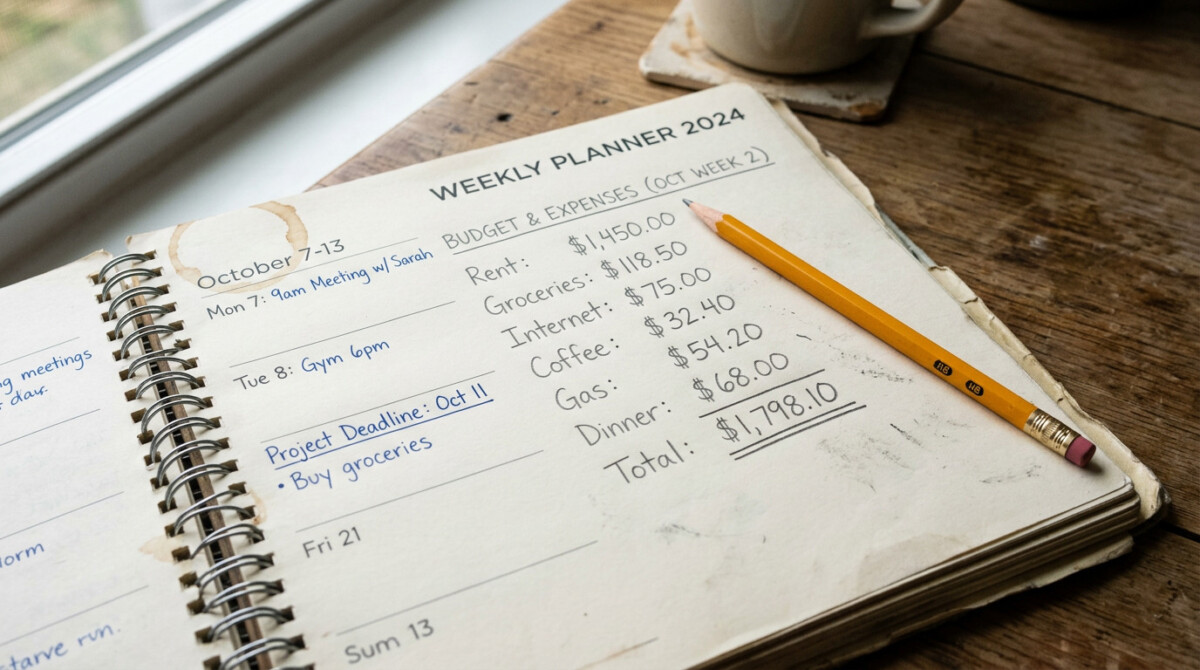
What a real zero-based budgeting month looks like
Below is my first successful month, lightly rounded. Take-home pay was $4,180. I’m including it not because your numbers should match mine — they won’t — but because every example I found online back then was suspiciously tidy, and mine wasn’t.
| Category | Assigned | Note |
|---|---|---|
| Rent | $1,350 | Fixed |
| Utilities | $165 | Averaged, runs high in July |
| Internet + phone | $110 | Fixed |
| Groceries | $520 | Down from $587, not down to $400 |
| Gas + car insurance | $295 | Fixed-ish |
| Car payment | $240 | Fixed |
| Student loan | $210 | Minimum |
| Credit card payoff | $300 | Minimum + $190 extra |
| Dining out | $180 | The line that hurt to write |
| Subscriptions | $46 | Was $71 before the audit |
| Household + toiletries | $65 | Variable |
| Pet | $55 | Food + flea meds |
| Emergency fund | $250 | Assigned, not spent |
| Car repair fund | $75 | Sinking fund |
| Vet + pet emergencies | $60 | Added after The Incident |
| Gifts + holidays | $40 | Sinking fund |
| Haircuts + personal | $35 | Variable |
| Fun money (no questions asked) | $120 | Non-negotiable, see below |
| Buffer | $64 | Rounding + small surprises |
| Total assigned | $4,180 | Left to assign: $0 |
Two things worth pointing out. The $120 fun money line isn’t a moral failing — it’s the reason this budget survived. And the buffer line exists because I lost my first two attempts to $9 and $14 discrepancies that made the whole thing feel broken.
What happens when you blow a category mid-month?
You move money. That’s it. That’s the entire answer, and it’s the part almost nobody tells beginners.
In that first month I overspent groceries by $91. I did not fail. I opened the notebook, moved $84 out of dining out and $7 out of the buffer, and the bottom line still read zero. Nothing was on fire. The budget bent instead of breaking.
The reframe that made it stick: zero-based budgeting isn’t a promise you make to your future self. It’s a plan your present self is allowed to renegotiate — as long as the total still adds up to zero.
For the record, I rewrote that first month nine separate times before it was over. Month two, four times. Month three, twice. By month five it was mostly leave-it-alone. If you’re editing constantly at the start, you’re doing it correctly.
Zero-based budgeting with irregular income
Budget the money you already have, not the money you expect. This single adjustment makes zero-based budgeting work for freelancers, servers, rideshare drivers, and anyone on commission — and honestly it’s cleaner than what most salaried people do.
The sequence:
- On the 1st, assign only the cash currently sitting in your checking account.
- Fund obligations in priority order: housing, food, utilities, transportation, minimum debt payments. Stop when you run out.
- When new money lands mid-month, run another assignment round with it — same rules, next priority down.
- In a strong month, over-fund next month’s rent before you fund anything fun. Getting one month ahead is the whole game.
A friend of mine who drives for a delivery app runs it this way and calls it “budgeting in waves.” He’s more financially stable than several salaried people I know, mostly because he’s never once budgeted a number he hadn’t already been paid. If you want a plain-English primer on the priority-order idea, the government’s MyMoney.gov covers the same ground without any product to sell you.
The mid-month check-in that does most of the work
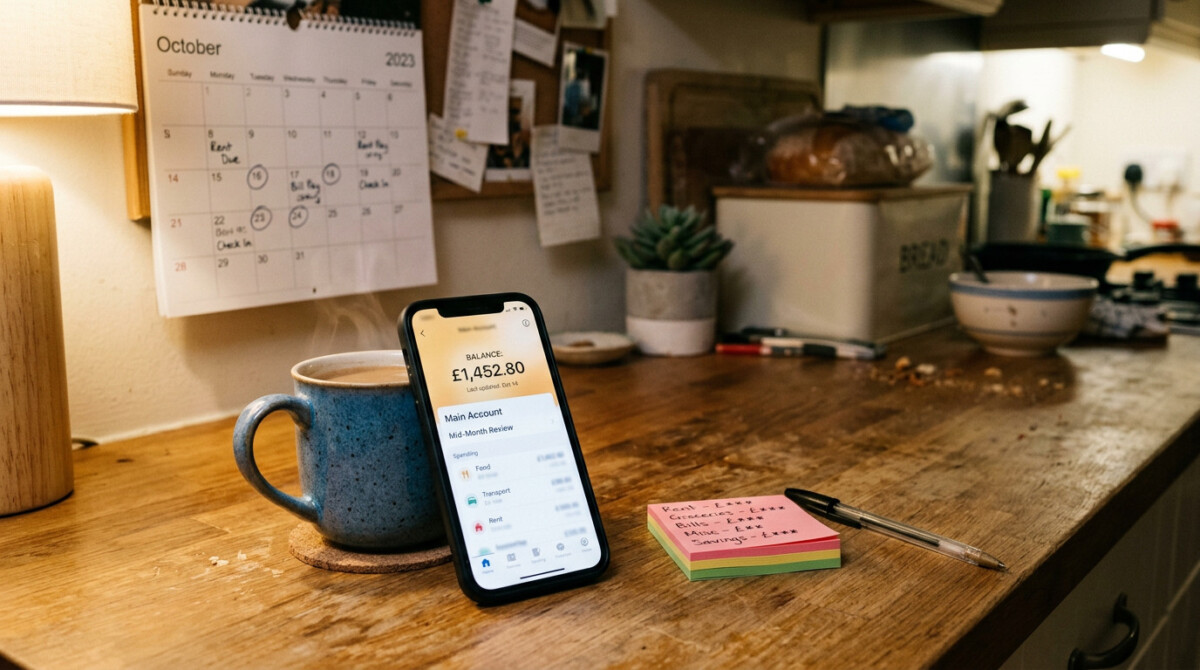
Building the plan takes 20 minutes once a month. Keeping it alive takes ten minutes on the 15th. Skipping that check-in is, in my experience, the number one reason people say “I tried budgeting and it didn’t work.”
Three questions, that’s all:
- Which categories are running hot? (Move money now, while there’s still money to move.)
- Did anything land that I didn’t plan for? (Assign it — don’t let it float.)
- Is anything coming in the next two weeks I forgot about? (Wedding, oil change, field trip.)
Set a recurring phone reminder for the 15th before you close this tab. I’m serious about that one — it’s the highest-return ten minutes in the entire method.
Zero-based budgeting FAQ
Does zero-based budgeting mean spending all my money?
No. It means assigning all of it. Money you assign to savings, an emergency fund, or extra debt payments is fully accounted for — it just isn’t leaving your accounts. Your bank balance shouldn’t hit zero; your “left to assign” line should.
How long does zero-based budgeting take each month?
Plan on 45 minutes for your first one, since you’re pulling statements and discovering your real numbers. After that it’s usually 15–25 minutes, plus a ten-minute check-in halfway through the month.
Can I use zero-based budgeting with a variable paycheck?
Yes, and it’s arguably the best method for it. Assign only the money currently in your account, fund obligations in priority order, and run another assignment round each time new income arrives.
Do I need an app for zero-based budgeting?
No. A notebook or a blank spreadsheet works. Apps mainly help with the tracking half — knowing what you’ve spent so far — rather than the assigning half. I used paper for six months first, and the paper months taught me more.
What if I overspend in a category?
Move money from another category so the total still comes to zero. Overspending isn’t a failure of the system; it’s the system telling you your original guess was off. Adjust and continue.
Start with one month, not one year
Don’t try to design the perfect budget. Design one that survives August.
Write down your take-home pay. List your bills. Pull three months of statements and be honest about groceries. Give the annual stuff a monthly line. Then keep moving money around until the bottom of the page reads zero — and plan on rewriting it, repeatedly, without treating that as evidence you’ve failed. That’s zero-based budgeting in practice, and it took me nine rewrites, one $340 vet bill, and one abandoned attempt to figure out.
Next in this series: How much should you actually have in an emergency fund? — including why the standard “3 to 6 months” advice is close to useless as a starting number.