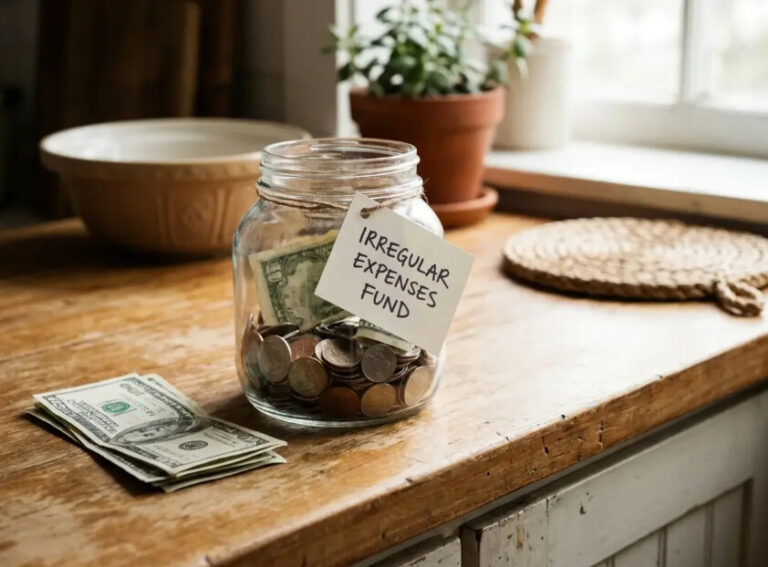
I tried my first no-spend challenge the January after a holiday season that wrecked my credit card statement. I made it eleven days. Not thirty — eleven. I quit on a Tuesday night because I was tired, hadn’t meal-prepped, and DoorDash was sitting right there on my phone like it was daring me. It took me two more attempts, spread across a year, before I actually finished one. What finally worked wasn’t willpower — it was a framework that didn’t rely on willpower in the first place, and that’s what this post walks through.
What Is a No-Spend Challenge, Exactly?
A no-spend challenge is a set period of time — usually a week, a month, or occasionally a full quarter — where you commit to spending money only on pre-approved essentials (housing, utilities, groceries, transportation to work, minimum debt payments) and cut out everything else: takeout, subscriptions you don’t use, impulse purchases, “just browsing” online shopping, and the small daily spends that never show up as a single big number but add up to one by month’s end.
It’s not the same as a strict budget. A budget tells you how much you’re allowed to spend in each category. A no-spend challenge removes entire categories for a fixed window, which is exactly why it feels harder up front — and why it resets your spending habits faster than a budget alone usually can.
Why Do Most No-Spend Challenges Fail by Day 10?
In my case, the eleven-day failure came down to one thing: I treated “no spending” as a rule I had to white-knuckle through, instead of a system I had set up in advance. I hadn’t planned meals. I hadn’t told anyone I was doing it, so there was zero accountability. And I picked the hardest possible month — one with two friends’ birthdays in it.
The pattern shows up in almost every failed attempt I’ve seen people describe (and the ones I’ve lived through myself):
- No meal plan. Decision fatigue at 6pm on a Wednesday beats good intentions almost every time.
- Starting during a high-obligation month — birthdays, holidays, a wedding season — instead of a quiet one.
- Treating it as all-or-nothing. One slip feels like total failure, so people quit instead of just continuing.
- No clear line between “essential” and “not essential” drawn before day one, which means every purchase becomes a debate.

How Long Should Your No-Spend Challenge Last?
The length you pick matters more than most people think. A 7-day challenge is a good test run if you’ve never done one. A 30-day challenge is the sweet spot for actually changing habits and seeing a real number saved. Longer than that, and most people either burn out or start finding loopholes.
| Duration | Best For | Typical Difficulty |
|---|---|---|
| 7 days | First-timers testing the waters | Low — mostly a scheduling exercise |
| 30 days | Actually resetting habits and seeing meaningful savings | Moderate — the standard recommendation |
| 90 days | Aggressive debt payoff or a specific savings goal | High — plan carefully or expect burnout |
What Counts as a “Spend” — And What Doesn’t?
This is the step almost everyone skips, and it’s the one that saved my second attempt. Before day one, write down exactly what’s allowed and what isn’t. Vague rules are the fastest way to talk yourself into a “gray area” purchase three days in.
| Usually Allowed | Usually Cut |
|---|---|
| Rent/mortgage, utilities, insurance | Takeout and restaurant meals |
| Groceries (planned, from a list) | Impulse online shopping |
| Gas or transit to work | Unused subscriptions and streaming add-ons |
| Minimum debt payments | Coffee shop runs, convenience store stops |
| Medical needs and prescriptions | “Treat yourself” purchases, new clothes |
Some people also allow one small, pre-approved exception — a single planned event, like a friend’s birthday dinner already on the calendar. That’s a personal call, but decide it in advance, not in the moment.

Week-by-Week: What Actually Happens During a 30-Day No-Spend Challenge
Nobody talks about how the emotional shape of a no-spend month changes week to week. Here’s roughly how mine went the time it actually worked — and it lines up with what most people report.
Week 1: Easy, almost fun. The novelty carries you. This is also when people over-plan and burn out on meal prep enthusiasm they can’t sustain for a full month.
Week 2: The hardest stretch. The initial motivation wears off and the habit hasn’t formed yet. This is where I quit the first time — a stressful workday plus zero food in the fridge equals a delivery app open before you’ve thought about it.
Week 3: Something shifts. Not spending starts to feel normal instead of restrictive. I noticed I stopped opening shopping apps out of boredom around day 17 or so.
Week 4: The finish-line effect. You can see the end, which makes the last stretch easier than week two, even though technically nothing changed.

How Much Money Can You Realistically Save?
This depends entirely on your baseline spending, so treat any number — including mine — as a rough illustration, not a promise. When I ran the numbers on my own 30-day attempt, the biggest single category wasn’t the one I expected.
| Category | Typical Monthly Spend (Before) | During No-Spend Month |
|---|---|---|
| Takeout / restaurants | $220 | $0 |
| Coffee shop runs | $65 | $0 |
| Impulse online shopping | $140 | $0 |
| Unused subscriptions | $35 | $0 (canceled) |
That’s roughly $460 in one month from just four categories — and the subscription cancellations kept saving money every month after the challenge ended, which is arguably the bigger long-term win. The Bureau of Labor Statistics’ Consumer Expenditure Survey breaks down average household spending by category if you want a benchmark for your own numbers.
What Should You Do When You Slip Up?
You will probably slip up. The difference between people who finish a no-spend challenge and people who quit isn’t that the finishers never slip — it’s what they do in the next ten minutes after it happens.
- Don’t restart the clock. One bad day doesn’t erase 20 good ones. Keep going from tomorrow.
- Write down what triggered it. Stress, boredom, and social pressure are the three most common triggers — knowing yours helps you plan around it next time.
- Adjust the rule if it’s genuinely unworkable, not just uncomfortable. There’s a real difference between “I broke a reasonable rule” and “I set an impossible rule.”
How Do You Turn a No-Spend Month Into a Permanent Habit?
The challenge itself is temporary by design — but the point isn’t to white-knuckle for 30 days and then celebrate with a shopping spree. The habits worth keeping are usually the boring ones: the canceled subscriptions you didn’t miss, the meal-planning routine that turned out to be less work than ordering out, and the awareness of exactly what triggers your impulse spending.
A lot of people use the money freed up during the challenge to jump-start an emergency fund or a sinking fund for irregular expenses — both are natural next steps once you’ve proven to yourself you can go a full month without the extras.

Frequently Asked Questions
How long should a beginner’s no-spend challenge last?
Start with 7 days if you’ve never done one. It’s long enough to feel the discomfort and short enough that most people can finish, which builds confidence for a 30-day attempt later.
Can you do a no-spend challenge if you have kids?
Yes, though you’ll likely need to add a few practical exceptions — school-related costs, for example — to your “allowed” list before you start, rather than deciding case by case.
What’s the difference between a no-spend challenge and a strict budget?
A budget sets a spending limit within categories; a no-spend challenge removes entire non-essential categories for a fixed period. Many people use a challenge as a reset, then move back to a regular budget afterward.
Do gift cards or store credit count as “spending” during the challenge?
Most people count using existing gift cards or store credit as allowed, since no new money leaves your account. Decide this rule for yourself before day one so it’s not a gray area mid-challenge.
What should I do with the money I save?
Common next steps include building or topping up an emergency fund, paying down high-interest debt, or starting a sinking fund for a specific upcoming expense. The Consumer Financial Protection Bureau’s budgeting tools are a solid free resource for deciding where extra savings should go next.
Written by [AUTHOR NAME], who has run three no-spend challenges — one failed attempt and two completed ones. This post reflects lessons learned from that experience alongside general budgeting best practices; it is for informational purposes only and isn’t personalized financial advice.